
Treating skin cancer on the face is often about more than eliminating the disease. Once Mohs surgery or another form of skin cancer removal is complete, patients are often left with a wound that requires careful reconstruction — and the cosmetic outcome of that reconstruction matters enormously. The face is visible, expressive, and central to how people move through the world. Understanding what to expect from facial reconstruction after skin cancer removal helps patients approach this step with realistic expectations and confidence in the process.
Skin Cancer Reconstruction: The Facts Up Front
- Mohs surgery removes facial skin cancer with precision, but the wound left behind requires its own dedicated reconstruction procedure.
- The cosmetic outcome depends on several factors, including defect size, location, skin quality, and the reconstructive technique used.
- Common reconstruction options include primary closure, local tissue flaps, skin grafts, and structural grafts, often used in combination.
- Scars from facial reconstruction continue to improve for up to a year to a year-and-a-half, and additional refinements are available if needed.
- Consulting a facial plastic surgeon early, before Mohs surgery, leads to better planning and more seamless results.
Skin Deep: Why Reconstruction After Mohs Surgery Is Its Own Procedure
Mohs micrographic surgery is the gold standard for removing facial skin cancers, including basal cell carcinoma, squamous cell carcinoma, and, in select cases, melanoma. The technique removes cancerous tissue layer by layer, with each layer examined under a microscope until no cancer cells remain. This precision allows the Mohs surgeon to spare as much healthy tissue as possible — but it still leaves a surgical defect that must be repaired.
Reconstruction after Mohs surgery is a distinct procedure that follows cancer removal. It is not an afterthought. The size, depth, and location of the defect — combined with the unique anatomy of the face — determine which reconstructive approach is most appropriate. Patients who understand this early tend to have a smoother experience and more realistic expectations about healing and results.
What the Aesthetic Outcome Actually Depends On
Several interconnected factors shape the final aesthetic result of facial skin cancer reconstruction. No two patients are exactly alike, which is why reconstruction must be tailored to each individual rather than standardized.
The size and depth of the surgical defect are among the most significant variables. Smaller, more superficial defects are generally easier to reconstruct with minimal visual impact. Larger or deeper wounds — particularly those that extend into underlying cartilage or involve free margins like the eyelid, nostril rim, or ear — require more complex surgical procedures and sometimes may involve a longer healing process.
Location on the face and neck also plays a major role. Certain areas, such as the nose, eyelids, lips, and ears, are both anatomically complex and highly visible. A skilled plastic surgeon will plan incision placement to follow natural skin creases and aesthetic boundaries, helping scars settle into less noticeable positions over time.
Skin quality and the patient’s individual healing ability matter as well. Age, skin laxity, sun damage history, and overall health all influence how tissue heals following reconstructive surgery. Patients who smoke can experience impaired healing and are generally counseled to quit several weeks to months before and after any surgical procedure. Diligent post-operative care, protecting the site, following wound care instructions, and attending all follow-up appointments, plays a meaningful role in the outcome.
Reconstruction Techniques Used After Skin Cancer Surgery
The appropriate technique depends on the defect. A facial plastic surgeon with experience in skin cancer reconstruction will evaluate the wound and recommend the approach most likely to achieve the best functional and cosmetic result.
The main options include:
- Local tissue flaps: Healthy skin adjacent to the wound is lifted, rotated, or advanced to cover the defect. Flaps preserve their original blood supply, which promotes reliable healing and tends to produce superior cosmetic outcomes. This is the most commonly used approach for moderate-to-larger defects on the face.
- Skin grafts: A layer of skin is taken from a donor site elsewhere on the body and placed over the wound. Skin grafts are typically used for superficial defects where local tissue movement is limited. The grafted skin gradually integrates and, over weeks to months, will more closely resemble the surrounding skin.
- Cartilage or structural grafts: When a defect is deep enough to affect underlying cartilage, particularly on the nose or ear, a structural graft may be needed to restore the shape and support of the affected area before skin coverage is completed.
For complex defects, a more extensive flap repair and/or a combination of these techniques may be used together to achieve the best outcome.
What Recovery Looks Like After Facial Reconstruction
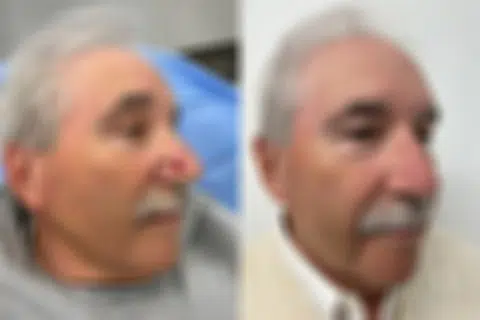
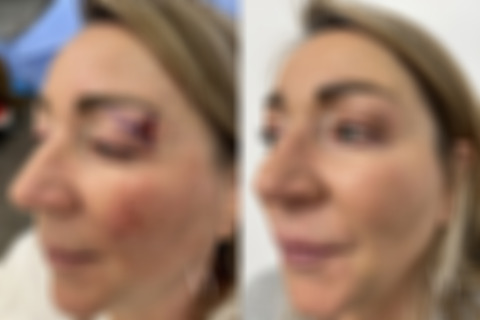
The healing process varies depending on the extent of the reconstruction. For most patients, sutures are typically removed within five to seven days. Those who underwent skin grafting generally have an additional period when the grafted skin continues to mature and strengthen over the following few weeks.
Swelling, bruising, and some temporary numbness in the treated area are common and expected in the initial weeks. Patients who had more involved flap surgery may need to sleep with their head elevated and limit strenuous activity for a few weeks during the recovery period.
Scars evolve significantly over time. Most continue to soften, fade, and flatten throughout the first year following surgery. In some cases, additional refinements — such as scar revision, steroid injections, or laser treatment — can further improve the final appearance. A surgeon with experience in both reconstruction and cosmetic outcomes will anticipate these possibilities from the start and plan accordingly.
When to See a Facial Plastic Surgeon for Reconstruction
Ideally, patients should consult a facial plastic surgeon before Mohs surgery is performed. Coordination between the dermatologist or dermatologic surgeon who removes the cancer and the plastic surgeon who performs the reconstruction leads to better planning and more seamless care.
Reconstruction is typically performed the same day as Mohs surgery or shortly after, depending on the complexity of the defect and the patient’s overall condition. Patients who have already undergone skin cancer removal and are concerned about the appearance of their scar or the function of a treated area may also schedule a consultation. Scar revision and secondary reconstruction are typically options that are delayed for a period of time to monitor the evolution of healing before a final treatment plan is determined.
Why Facial Plastic Surgery Expertise Makes a Difference
Not all reconstruction is equal, and who performs it matters. A facial plastic surgeon brings specialized knowledge of facial anatomy, aesthetic proportion, and reconstructive technique that is directly relevant to skin cancer reconstruction on the face and neck.
This expertise allows for thoughtful incision planning, precise tissue handling, and reconstruction that prioritizes both healing and appearance from the outset.
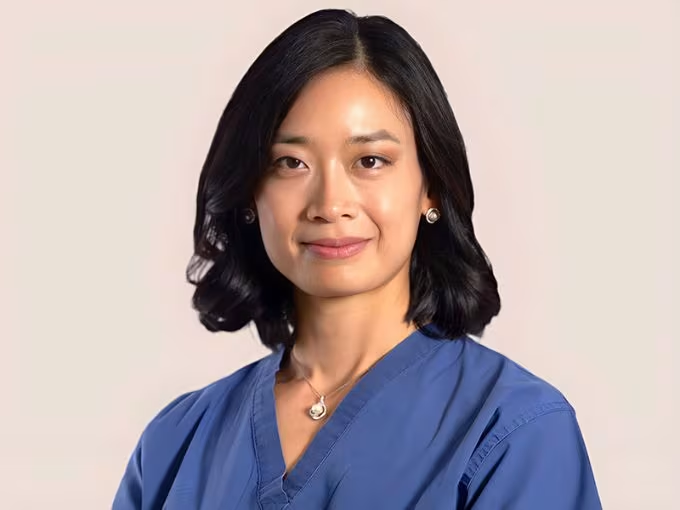
Dr. Alisa Yamasaki is a double board-certified facial plastic surgeon serving patients in Princeton, NJ and Yardley, PA. Her practice focuses on reconstructive surgery of the face, including skin cancer reconstruction following Mohs surgery and excision. Patients benefit from care that addresses the full scope of their needs — from cancer removal coordination through the complete healing process.
Every nose is unique and your surgery should be too
Get expert advice customized to you from Dr. Alisa Yamasaki. Schedule your consultation now.
Schedule a Skin Cancer Reconstruction Appointment with Dr. Yamasaki
If you’ve been diagnosed with facial skin cancer and are exploring your reconstruction options, contact Dr. Yamasaki’s practice to schedule a consultation. Early involvement of a facial plastic surgeon in your care plan gives you the best foundation for a result that is both medically sound and cosmetically meaningful.
Frequently Asked Questions About Facial Reconstruction After Skin Cancer Removal
The goal of reconstruction is to restore your face as closely as possible to its natural appearance. In many cases, patients are pleased to find that well-planned reconstruction — with incisions placed along natural skin lines — produces results that are far less noticeable than they anticipated. Some change in appearance is possible, particularly for larger defects, but an experienced facial plastic surgeon will plan the procedure with aesthetic outcomes as a primary consideration alongside the functional aspect of the repair.
Reconstruction after skin cancer removal is generally considered a medically necessary procedure and is typically covered by insurance. It is important to involve a facial plastic surgeon prior to Mohs surgery so that coverage details can be confirmed with the insurance company before scheduling surgery, as policies vary. The practice can assist with documentation to support insurance approval when needed.
Scars from facial reconstruction typically improve substantially over the course of the first year to year-and-a-half. Immediately after surgery, a scar may appear red, raised, or more prominent than it will ultimately become. As healing progresses, most scars soften, flatten, and fade considerably. If a scar remains bothersome after the initial healing period, additional treatment options — including scar revision, laser resurfacing, or steroid injections — may further improve its appearance.
Most patients achieve their desired outcome with a single reconstructive surgery, but some cases — particularly those involving larger defects, complex anatomical locations, or multi-stage flap techniques — will require multiple surgeries or may benefit from a later refinement procedure. This is planned in advance when applicable and is not a sign that the initial surgery was unsuccessful. Your surgeon will discuss the realistic likelihood of staged or follow-up procedures during your consultation.